
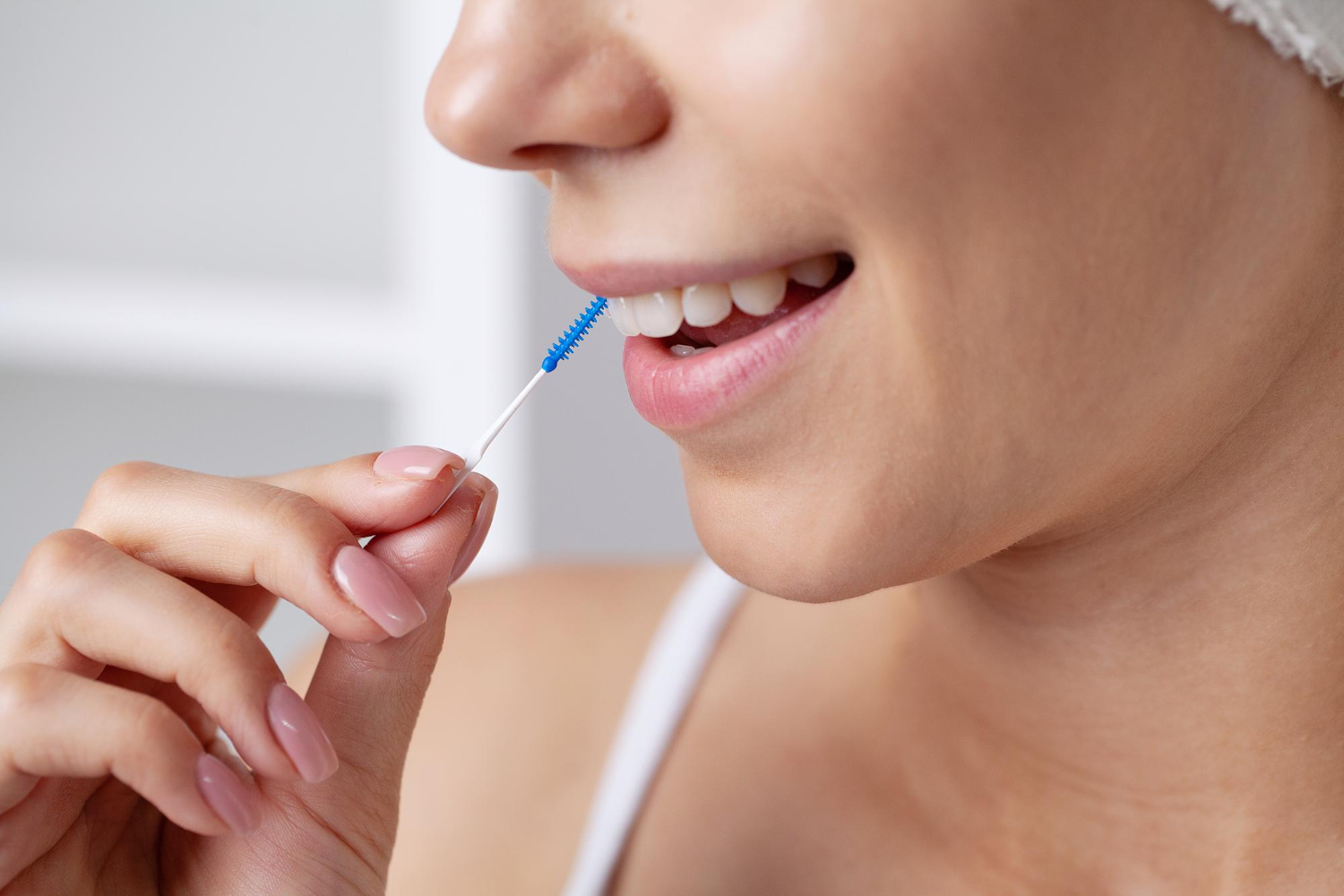
Modern orthodontics has made significant advances in recent years, with clear aligner treatments such as Invisalign among the most popular options for both adults and teenagers. This method offers excellent aesthetics, as the aligners are almost invisible, while also allowing comfort during everyday activities and speech. However, patients sometimes overlook a fundamental factor: the success of orthodontic treatment depends not only on its digital planning, but also on the health of the teeth and gums.
Because clear aligners cover the teeth for 20 to 22 hours a day, any food debris or plaque left behind can increase the risk of dental problems. This is where interdental brushes can play an important role in a patient’s oral hygiene routine. Without cleaning between the teeth, oral care during orthodontic treatment may be incomplete, potentially affecting the health of the teeth and gums throughout treatment.
How Invisalign affects the oral environment
Under normal circumstances, saliva plays an important protective role. It flows around the teeth, helps wash away food particles, contains antibodies and helps neutralise the acids produced by bacteria after the consumption of carbohydrates.
When Invisalign aligners are in place, they cover the teeth and can limit the natural flow of saliva across their surfaces. If food debris remains between the teeth, plaque bacteria may multiply in the warm, moist environment beneath the aligners. The acids they produce can then remain in contact with the enamel for longer.
This may contribute to enamel demineralisation, which can initially appear as white spots and may progress to tooth decay. Bacteria can also irritate the gums, leading to inflammation, swelling and bleeding, a condition known as gingivitis. If gum inflammation is not managed, swelling may affect how comfortably the aligners fit. This can interfere with their intended function and may delay treatment. Cleaning between the teeth with an appropriate interdental brush can help remove plaque and food debris from these spaces.
Why interdental brushes may be more suitable than floss
Patients often ask why traditional dental floss may not be enough and why their dentist recommends interdental brushes. The answer depends on the shape of the teeth and the spaces between them.
The sides of neighbouring teeth are not perfectly flat. They have natural contours, grooves and hollows, particularly around the premolars and molars. Dental floss moves in a thin line between the teeth, so it may not clean every part of these uneven surfaces.
Interdental brushes have a central wire surrounded by soft bristles. When appropriately sized, the bristles can adapt to the contours of the space and help remove plaque from areas that floss may not reach as effectively. Research in periodontology has found that interdental brushes can be more effective than floss at removing plaque in some situations, although the best option depends on the size and shape of each space.
During Invisalign treatment, small composite resin attachments may also be placed on the teeth. Plaque and food debris can accumulate around them. Floss may catch or fray around an attachment, while an appropriately sized interdental brush can help clean around its edges. Your dentist or orthodontist can recommend the right tool and technique for your teeth.
A step-by-step guide to using interdental brushes
Using the correct technique is just as important as choosing the right size. If used incorrectly, interdental brushes may bend or irritate the gums. Follow these steps, unless your dental professional has given you different instructions:
- Remove and store your aligners: Remove your Invisalign aligners carefully and place them in their case before cleaning between your teeth. Do not try to use an interdental brush while the aligners are in your mouth.
- Find the space: Stand in front of a mirror with good lighting. Position the tip of the brush at the gumline between two teeth.
- Insert gently: Guide the brush into the space with light, steady pressure. It should move through without force. If the wire bends or you meet firm resistance, stop. The brush may be too large for that space.
- Clean with a straight movement: Once the brush is through the space, move it straight back and forth. Avoid twisting it, as this may damage the wire.
- Rinse and repeat: Rinse the brush under running water after each space to remove food debris and plaque before moving on.
- Brush your teeth: After cleaning between your teeth, brush all tooth surfaces with a soft-bristled toothbrush and fluoride toothpaste.
- Clean and replace your aligners: Clean your aligners according to your orthodontist’s instructions, then place them back on clean teeth.
Common mistakes and how to avoid them
Although interdental brushes are practical, some common mistakes can reduce their effectiveness:
- Applying regular toothpaste to the brush: Toothpaste may be abrasive, and applying it to an interdental brush is generally unnecessary. Use the brush as directed by your dental professional, usually without toothpaste or with water. If a medicated gel is recommended, follow the instructions provided.
- Forcing the brush into a narrow space: Applying too much pressure can injure the gums. If even the smallest brush will not fit comfortably, use dental floss or ask your dentist or orthodontist which option is suitable.
- Continuing to use a worn or bent brush: Replace the brush when its bristles become worn or the wire is bent or damaged. Follow the product instructions and your dental professional’s advice on how often to replace it.
- Stopping because of mild bleeding: Bleeding may be a sign of gum inflammation, but it can also occur if the brush is used incorrectly or is the wrong size. Clean gently and seek advice from your dental professional if bleeding persists or worsens.
Oral hygiene strategies for Invisalign users away from home
Meals away from home—in the office, at school, while travelling or at a restaurant—can make it harder to maintain an oral hygiene routine. Invisalign aligners are generally worn for around 20 to 22 hours a day, so it is important to follow your orthodontist’s instructions on when to remove and replace them.
Interdental brushes can be a convenient part of a small oral hygiene kit. After eating, remove the aligners, clean your teeth and the spaces between them as thoroughly as possible, then replace the aligners according to your orthodontist’s instructions. A travel kit for Invisalign users may include:
- A case for storing the aligners.
- A travel toothbrush and a small tube of toothpaste.
- Interdental brushes in a protective case.
- Hand wipes for situations where soap and water are not readily available. Clean your hands before handling your aligners.
For clinical monitoring, treatment planning and personalised guidance at every stage of treatment, Dr. Angeliki Nikolopoulou, Orthodontist with expertise in Invisalign, provides professional care focused on achieving an aesthetic and functional result while protecting the health of the teeth and gums.